Building Loyalty That Lasts
How I designed a reward system that keeps users coming back to by.U
Client
by.U
Service Provided
Product Manager & UI Designer
YEAR
2025
MY TEAM
UX Researcher
UX Designer
MY ROLE
I wore two hats here—leading product strategy and crafting the user interface. From defining requirements to collaborating with developers, I was in it from start to finish.
CHAPTER 1 : THE CHALLENGE
When Growth Isn't Enough
by.U was doing great at getting new users through the door. But here's the thing—having tons of users means nothing if they don't stick around. We needed to shift from just attracting people to actually keeping them engaged for the long haul.
Think about it: you can keep pouring water into a bucket, but if there's a hole at the bottom, you're just wasting effort. That's exactly where we were. The real question wasn't "how do we get more users?" but "how do we make our users actually want to stay?"
"Customer loyalty is the roots of a successful business, and reward programs are the most popular and proven method for creating it."
HYPOTHESIS
CHAPTER 2 : UNDERSTANDING REAL PEOPLE
Getting Inside Users' Heads
Before jumping into design, I needed to understand what actually matters to people when it comes to loyalty programs. So we went deep—really deep—into research.
14,465
Survey Respondents
80
FGD Participants in 8 cities
8
Micro Influencers Interviewed
Key Insights That Changed Everything
95.6% of respondents were already familiar with loyalty systems—so we didn't need to educate, just execute well
People wanted telco rewards (data packages, pulsa) way more than random merchant vouchers
Points needed to be EASY to redeem—if it's complicated, people just won't bother
Users loved the idea of earning points from purchases, but only if the conversion rate felt fair
The most wanted rewards? Data packages, pulsa, and food vouchers
Membership levels were cool, but only if they were simple and actually achievable
This research wasn't just about validating our assumptions—it completely shaped our direction. We learned that simplicity and fairness were non-negotiable. Users don't want a confusing maze; they want a straightforward path to rewards they actually care about.
CHAPTER 3
Meet the Users: Not Just Data Points
All that research led us to real people with real needs. I created personas to keep us grounded—these weren't fictional characters, but representations of actual by.U users we needed to design for.
When you're designing, it's easy to get lost in features and flows. But personas reminded me every day: we're designing for real people who just want their lives to be a bit easier and more rewarding.
When you're designing, it's easy to get lost in features and flows. But personas reminded me every day: we're designing for real people who just want their lives to be a bit easier and more rewarding.
These personas became our north star. Every design decision, every feature prioritization—we'd ask ourselves, "Would this actually help our users? Would they understand this? Would they care?"
CHAPTER 4: MAPPING THE JOURNEY
Understanding the Big Picture First
Before diving into specific flows, I needed to understand how the entire loyalty system works as a whole. How do users discover it? What keeps them coming back? What's the complete loop?
The Loyalty Ecosystem
I mapped out the complete loyalty ecosystem as a continuous cycle—a self-reinforcing loop designed to keep users engaged long-term.
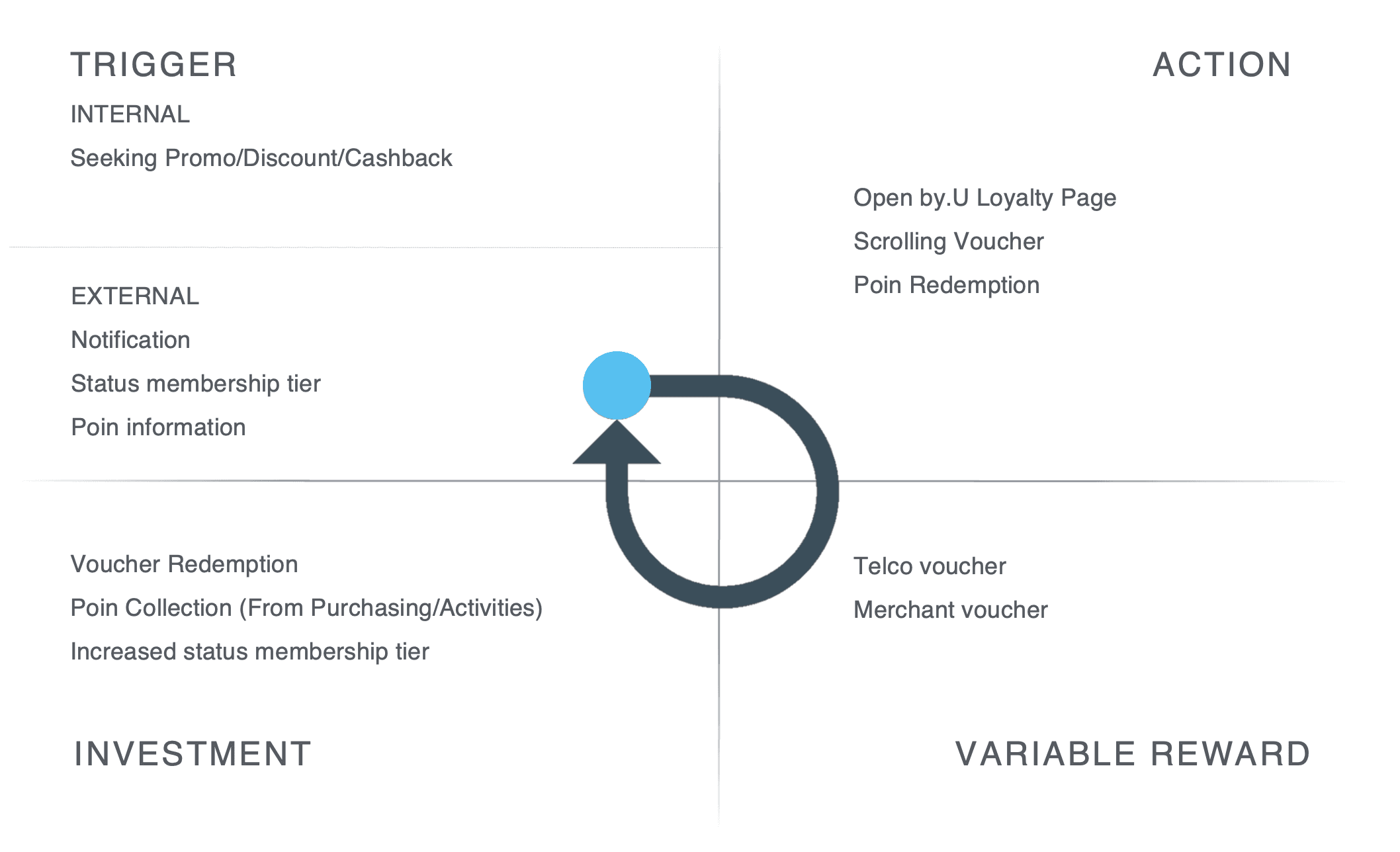
Here's how the loop works: Users enter through various triggers (seeking promos, getting notifications about their status), which lead them to take actions (opening the loyalty page, scrolling vouchers, redeeming points). These actions require investment (collecting points from purchases and activities, leveling up their membership tier), which earns them variable rewards (telco vouchers like data and pulsa, or merchant vouchers). These rewards reinforce the behavior and bring them back to the cycle.
This framework helped me see the loyalty program not as isolated features, but as an interconnected system where each part feeds into the next. Understanding this big picture was crucial before designing the specific touchpoints.
Zooming Into Core Journeys
With the ecosystem mapped, I focused on two critical user journeys that needed to be absolutely seamless:
Journey 2: My Voucher
After redemption, users need to easily find and use their vouchers. No hunting, no confusion—just smooth access.

Journey 1: Redeem Points
This is where the magic happens—users exchange their hard-earned points for actual rewards. It needed to feel satisfying, not frustrating.

Mapping these specific journeys helped me spot potential friction points before we even started designing. Where might users get confused? Where might they drop off? These maps were my design insurance policy.
CHAPTER 5: THE DESIGN
From Sketches to Pixels: The Design Evolution
Design is messy. It's iterative. It starts with rough sketches on paper and evolves through countless iterations. Here's how it all came together.
Step 1: Lo-Fi Sketches—Getting Ideas Out Fast
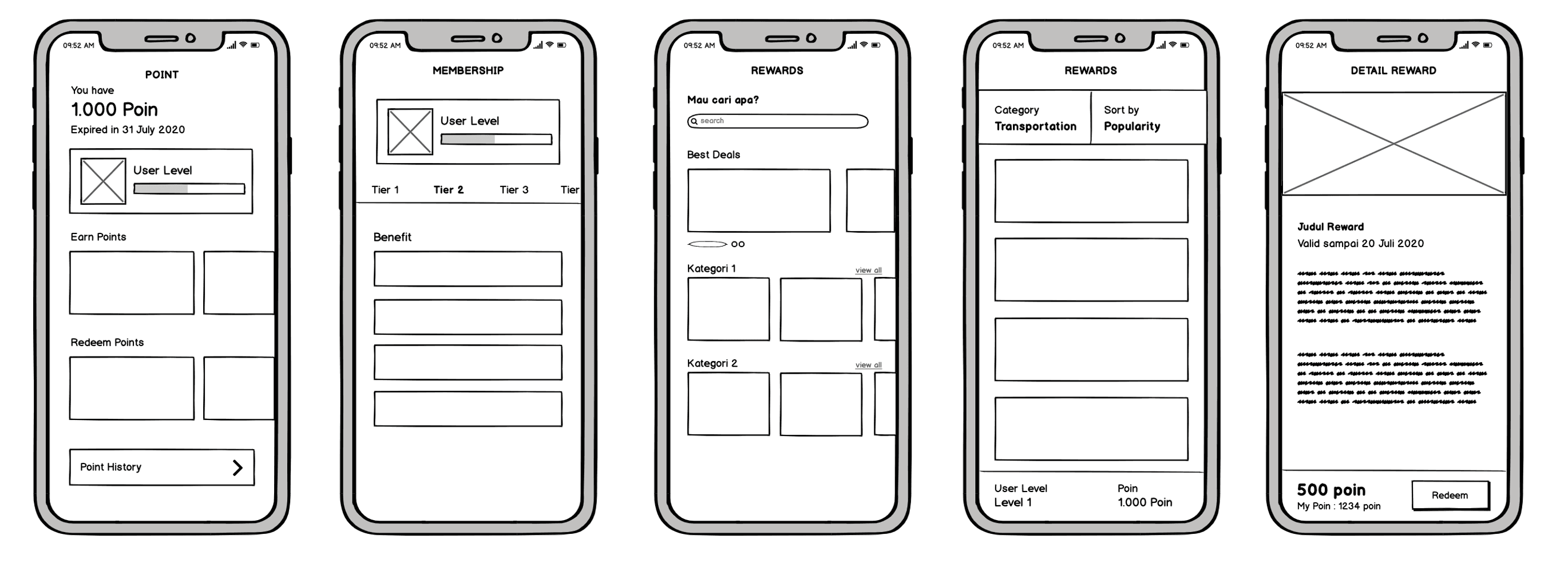
I started with digital low-fidelity wireframes—the fastest way to explore ideas without getting precious about visual details. These wireframes helped me work through different layout options, information hierarchy, and interaction patterns quickly, focusing purely on structure and function before diving into aesthetics.
Step 2: Building the Visual Foundation
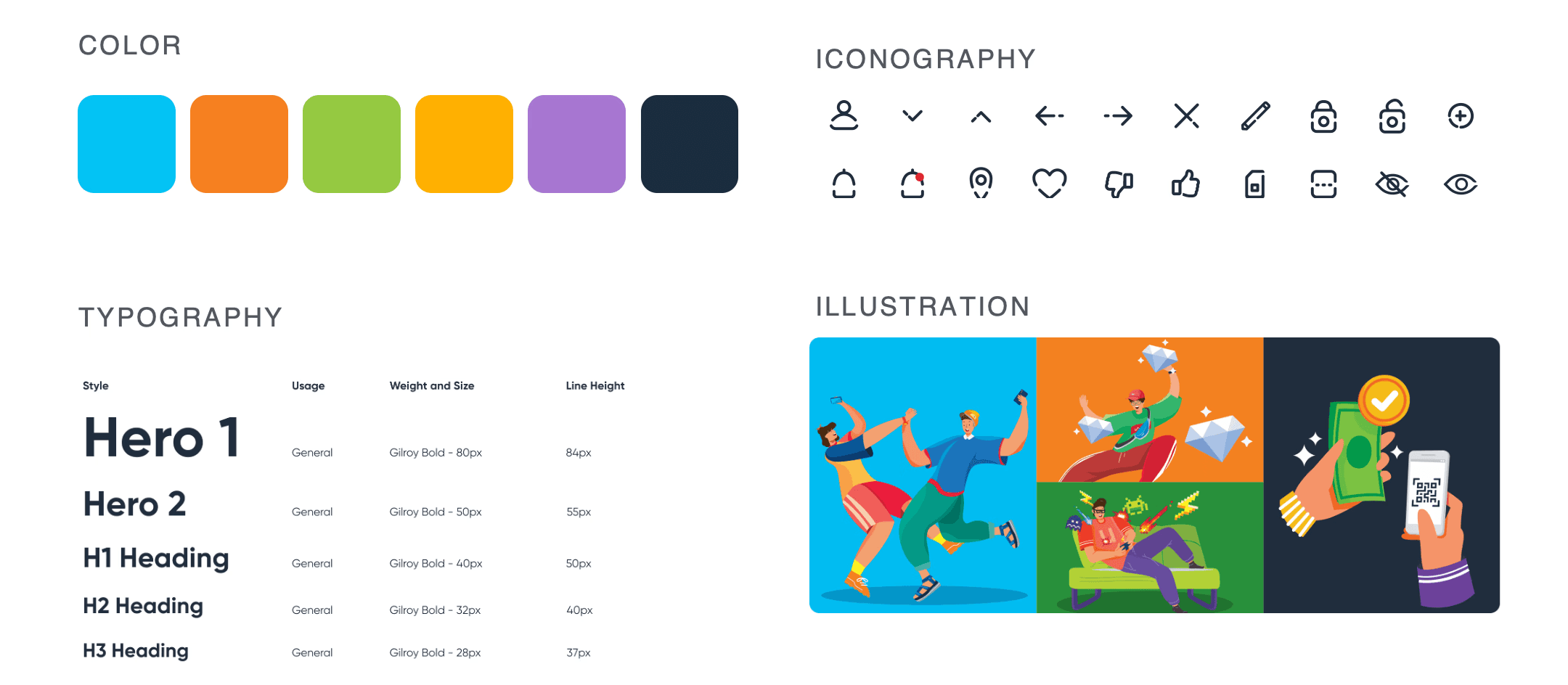
Before jumping into high-fidelity screens, I established a solid design system—colors, typography, iconography, and illustrations that would bring consistency and personality to the experience.
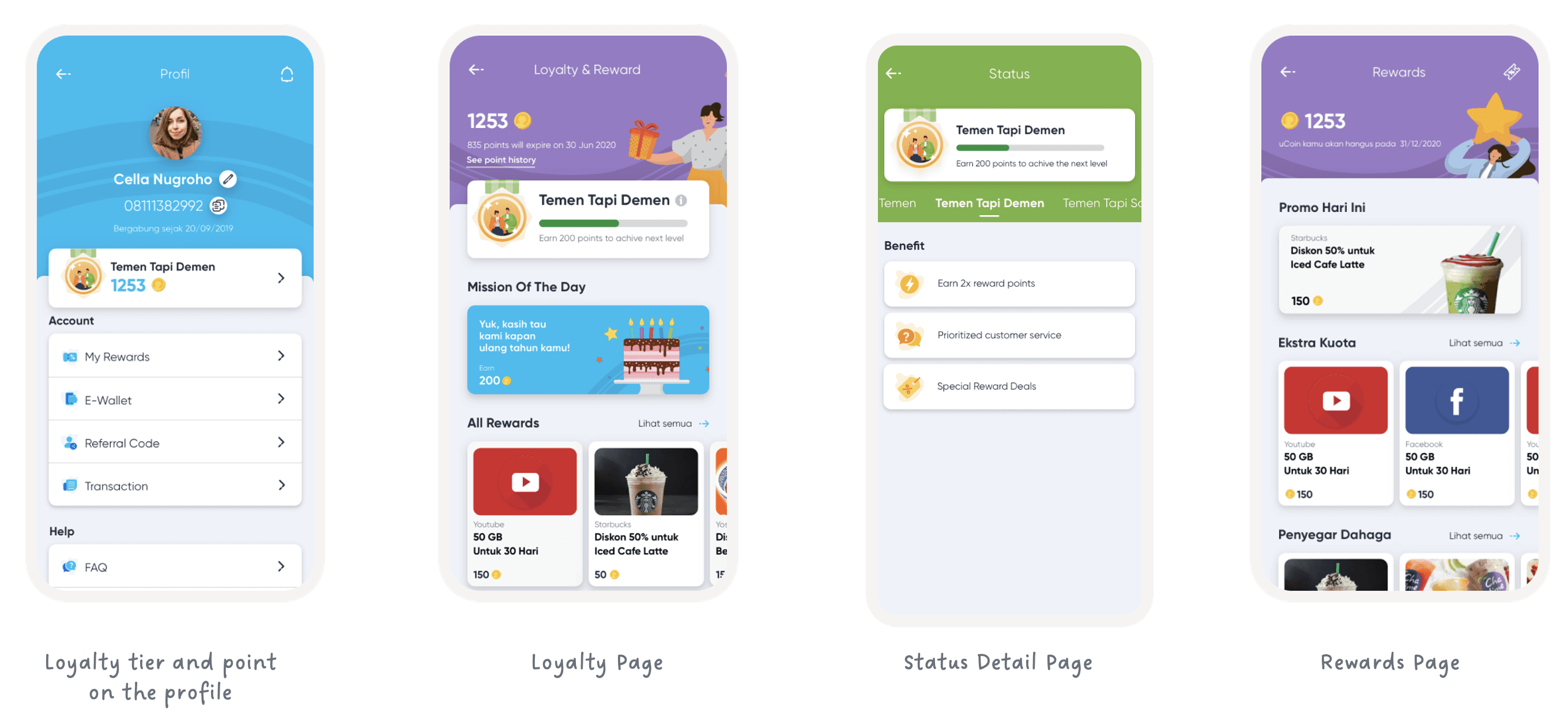
Step 3: Hi-Fi Visuals—Where It All Comes to Life
With the foundation set, I crafted the high-fidelity screens. Each screen was designed with intention—clear hierarchy, intuitive interactions, and visual appeal that matched by.U's brand.
CHAPTER 6: REALITY CHECK
When Users Keep You Humble
I thought the designs were solid. Then we put them in front of real users. Spoiler: they found issues we never saw coming. And that's exactly why testing is crucial.
Card Sorting: Getting the Language Right
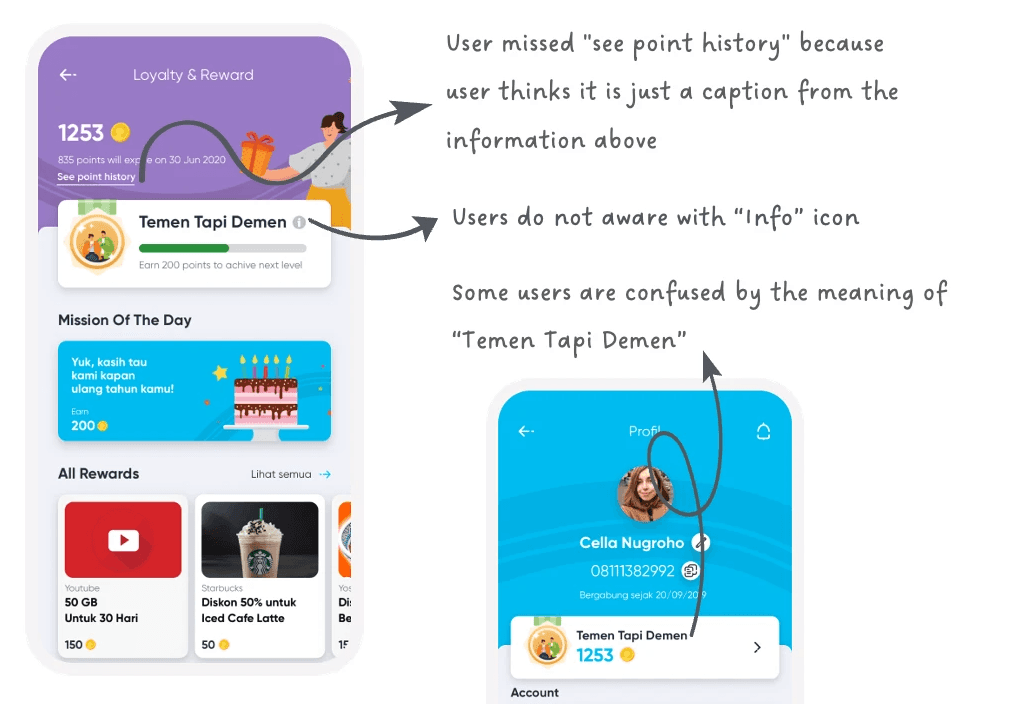
We ran card sorting to understand how users perceived our tier naming system. Some terms were ambiguous, and "Temen Tapi Demen" confused people. So we switched to more familiar terms and created illustrations that were instantly recognizable.
Usability Testing: The Brutal Truth
We gave real users task lists and watched them navigate the interface. What we discovered:
Design Iteration: Making It Right
Based on all that feedback, I went back to the drawing board. Not to redesign everything, but to refine the parts that weren't working. I made "see point history" more prominent, replaced confusing icons with clearer CTAs, and simplified the tier naming.
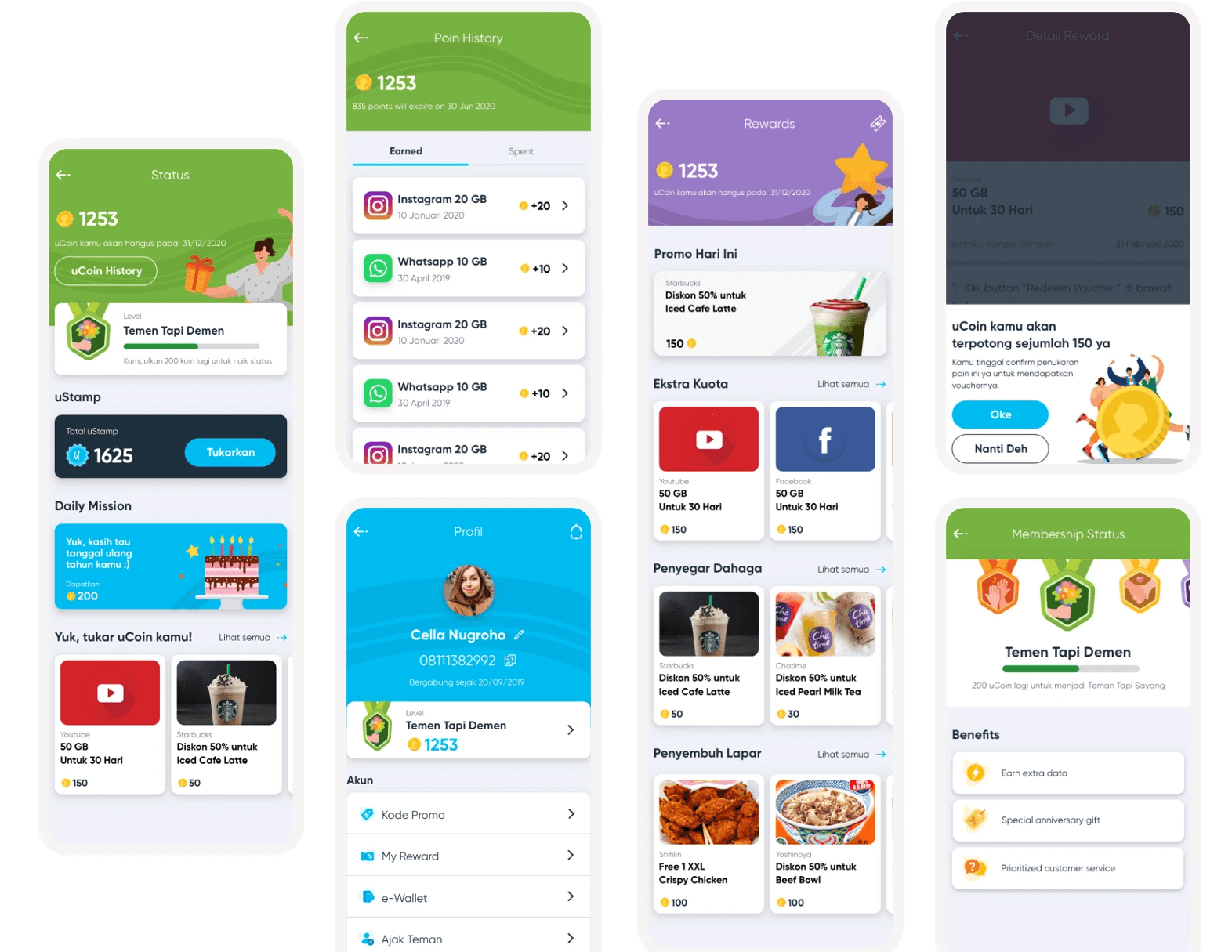
This is what separates good design from great design—the willingness to listen, adapt, and improve. Your first version is never your best version.
CHAPTER 7: THE IMPACT
Numbers Don't Lie
After launch, we watched the data closely. The first month showed promising signs, but also revealed where we needed to push harder.
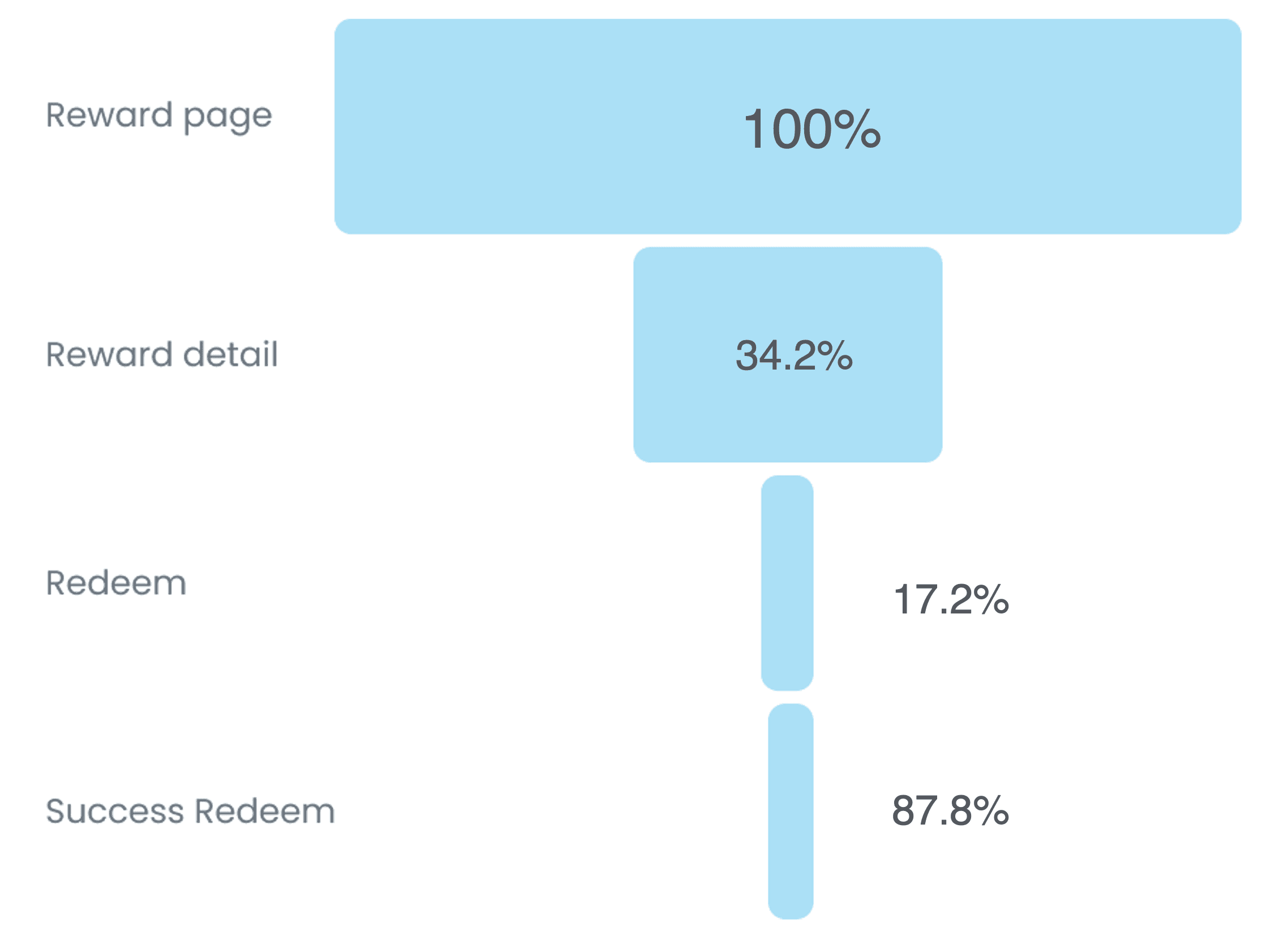
May 2021: The First Results
We saw a 5% conversion rate, with most redemptions coming from rewards under 150 uCoin. The conversion was lower than we hoped, but it made sense—most users still had less than 50 uCoin at that point.
What We Learned & Next Steps
Rather than see this as a failure, we treated it as a learning opportunity. Based on the data, we identified clear action items:
Highlight Low uCoin Rewards
Make it easier for users with fewer points to find rewards they can actually afford right now.
Create Loyalty Campaigns
Offer bonus uCoin for specific transactions to help users build their balance faster.
Expand Low-Cost Rewards
Add more rewards under 50 uCoin, including third-party options under 10 uCoin for quick wins.
"The best products aren't built in one launch—they're refined through continuous learning and iteration."
Personal Reflection
This project taught me that launching isn't the end—it's just the beginning. Real success comes from paying attention to how people actually use what you've built and being brave enough to keep improving it.
Working as both PM and designer gave me a unique perspective. I could make strategic decisions informed by user needs, and design solutions that were both beautiful and achievable. It's messy, it's challenging, but it's exactly where I thrive.
More Projects Worth Exploring
© 2026 — Designed by Nindy A Dewi • Made in Framer